
Choosing the Best Top for a Bathroom Vanity: Stylish, Durable Materials for Every Space

Picking the right top for your bathroom vanity can feel like a bit of a puzzle. With so many styles, colours, and materials available, it’s easy to get stuck wondering what actually works. Will it match your tapware and basin? Does it suit the vibe of your bathroom? And the biggest question of all – how easy is it to clean as no one wants something that’s a hassle to maintain or deteriorates sooner than expected.
The key is to focus on three things: style, durability, and compatibility. Your vanity top should not only look fresh and stylish, but also stand up to daily use and work seamlessly with your plumbing fixtures for easy installation.
To help simplify the process, here’s a breakdown of popular benchtop materials—highlighting the pros and cons to help you find the best fit for your space.
What to Look for in a Vanity Top
When choosing a vanity top, it’s important to ensure it pairs well with your chosen vanity cabinet—both in size and style. The material should suit your bathroom’s overall look while being practical for everyday use. Look for surfaces that are water-resistant, stain-resistant, and durable, as the vanity top often sees the most traffic. It needs to handle daily wear from exposure to water, soap, toothpaste, cleaners and other hygiene products without easily marking or wearing down from exposure to these elements.
Most Popular Vanity Top Materials Compared
Let’s have a quick look at some of the most common vanity top materials and the pros and cons for their use in your bathroom.
1. Solid Surface Vanity Tops
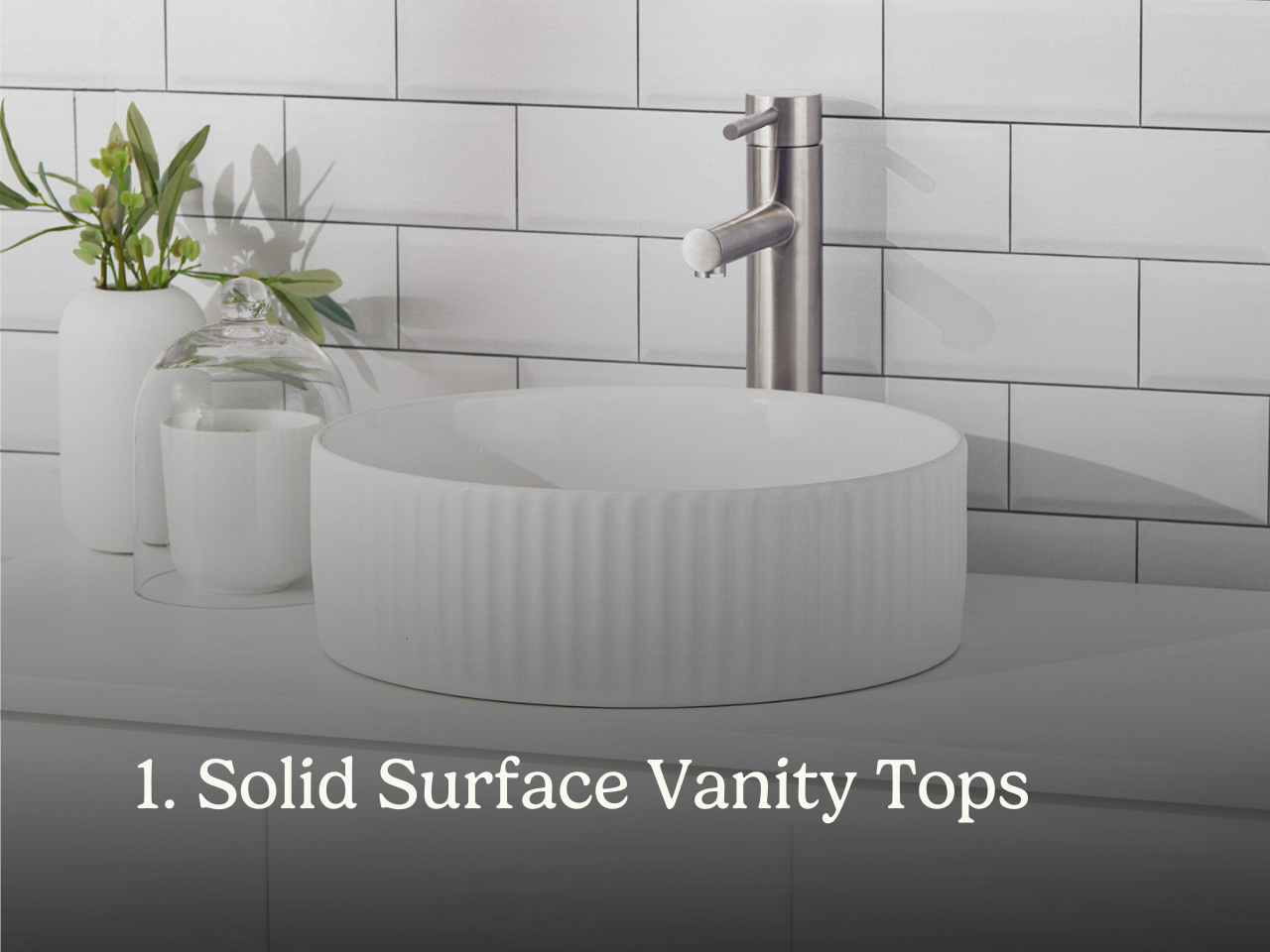
This is a great option for vanity tops as it is a durable, non-porous material that’s both stain and water-resistant, and importantly, contains zero crystalline silica, making it a safe choice post-ban. While it comes in limited widths—750mm, 900mm, and 1200mm—this can actually help reduce decision fatigue by simplifying the selection process. You’ll find this material featured in CIBO’s Nordic, Mornington, and Finer vanity ranges, offering stylish and practical solutions for modern bathrooms.
2. Ceramic Vanity Tops
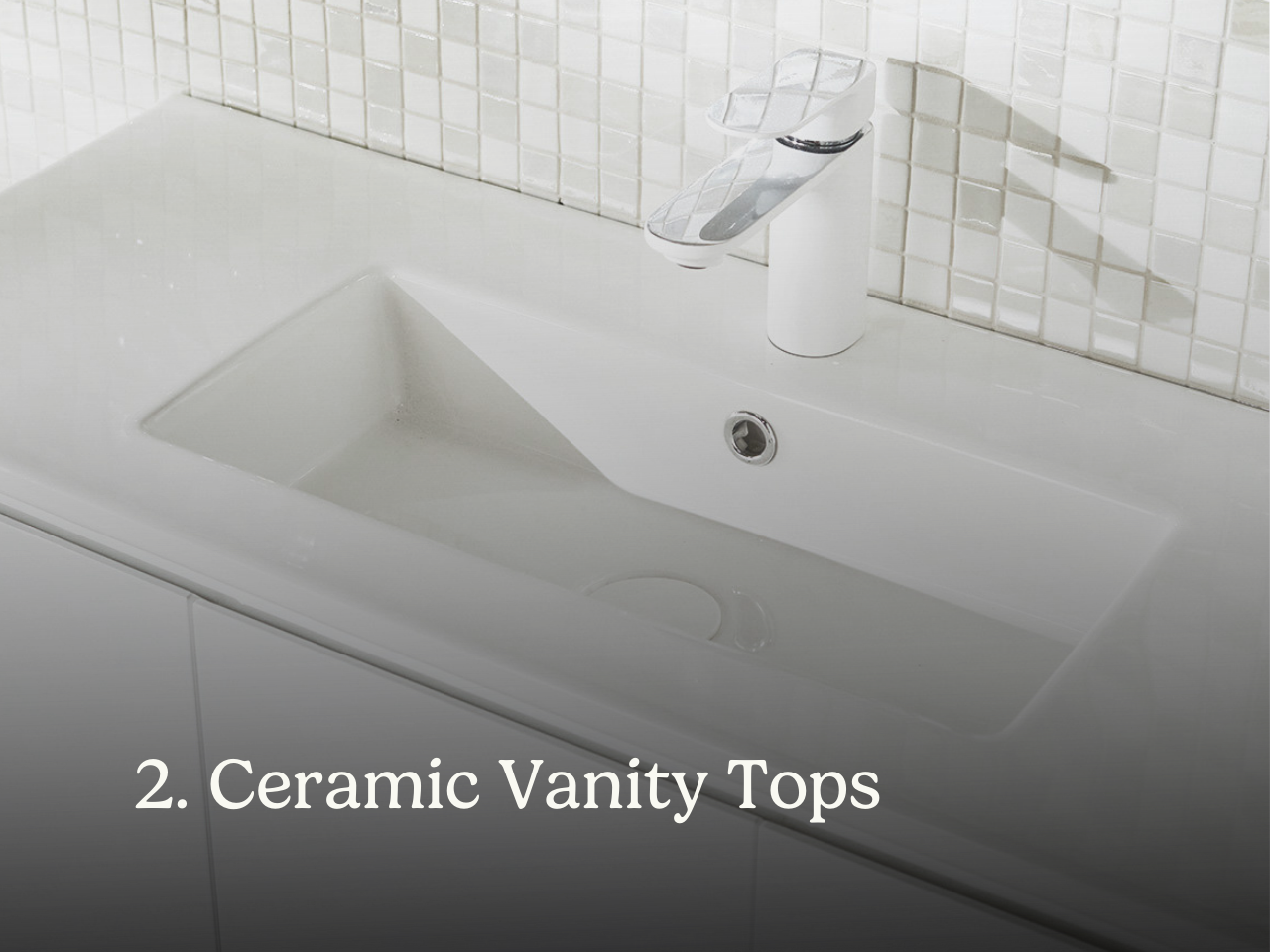
A common choice for homeowner is a ceramic vanity top where the basin is integrated into the benchtop. This removes the decision around the style of basin to install on top of the bench. Ceramic vanity tops offer a non-porous, stain-resistant surface that’s easy to clean and maintain, while delivering a timeless, classic look. Their durability and resistance to abrasions make them a practical and popular choice for bathroom spaces. CIBO’s Tonic, Ripple, Windsor, and Freshwater ranges feature ceramic tops designed to create a streamlined, cohesive finish that complements a variety of interior styles.
3. Acrylic Vanity Tops
If you’re looking for a similar vanity top to ceramic, the acrylic top is another option to consider. Acrylic vanity tops are durable, seamless, non- porous and easy to repair if damaged. However they can be susceptible to staining and can be scratched. They are usually more budget friendly than ceramic vanity benchtops which can work with financial restraints when renovating a bathroom.
4. Timber Vanity Tops
Timber is a classic benchtop material that brings natural warmth and character to any bathroom. Its versatility allows for easy customisation to suit a range of styles and layouts. However, in wet environments, timber does require regular upkeep to maintain its appearance and integrity. Opting for a timber vanity paired with a durable benchtop surface can help extend the lifespan of the unit while preserving its aesthetic appeal.
5. Laminate Vanity Tops
Laminate vanity tops are a budget-friendly and versatile option, often designed to replicate the look of premium materials such as marble or stone. While they offer aesthetic appeal at an accessible price point, laminate surfaces are susceptible to damage from heat (hello hair straighteners), scratches, chips, and eventual delamination. In most cases, repairs aren’t possible once the surface is compromised. With proper care, laminate can still be a practical choice for the bathroom, though its lifespan may be shorter compared to more durable benchtop materials available on the market.
6. Tile Vanity Tops
For those seeking a standout feature or focal point in the bathroom, a tiled vanity top offers a unique way to introduce texture and visual interest. This custom design option is ideal for homeowners who want to make a bold statement, combining durability with budget-friendly appeal. However, tiled surfaces do require additional maintenance, including regular cleaning and grout upkeep. Tiles may chip or crack over time, and repairs can be challenging if replacement tiles aren’t readily available. Despite the extra care involved, a tiled vanity top can deliver a distinctive and eye-catching element that sets your bathroom apart.
7. Concrete Vanity Tops
A concrete top vanity is durable and can be customised to suit your bathroom measurements and layout. It has become a popular material due to its modern aesthetic. However, it does require regular upkeep as it’s a porous material and requires resealing. Concrete is susceptible to cracking and can stain easily. Due to the weight, it can require significant installation costs. But if you have time to maintain and seal the concrete bench and love its look, it may be the right tone for your bathroom.
Materials to Avoid for Bathroom Use
While there are plenty of stylish options out there, some materials are best avoided in the bathroom. Silica-containing engineered stone has been banned in Australia since July 2024 due to serious health risks from dust exposure during installation.
Soft and porous materials like marble, timber and concrete, though trendy, can be easily damaged by spills and require frequent resealing to stay looking good. These surfaces are prone to etching and wear over time, especially in wet environments.
When choosing a vanity top, steer clear of materials that break down with water exposure or demand constant upkeep. A surface that needs frequent cleaning to prevent staining may not only be inconvenient—it can also shorten the lifespan of your benchtop.
Conclusion: Which Vanity Top is Right for You?
CIBO Bathroomware makes choosing the best top for your bathroom vanity simple, with a versatile range that includes solid surface, ceramic, flat top, and integrated basin options. If you’re looking for more guidance, explore our website for expert tips—from Comparing Countertop and Integrated Basins to How to Give Your Bathroom Vanity a Makeover.